
How Much Do Managed IT Services Cost in 2026?
A no-fluff pricing guide for businesses actively comparing MSPs
You've started getting quotes. One MSP says $99 per user per month. Another says $275. A third sends you a proposal so vague it might as well be written in a foreign language.
That range is not a mistake. It reflects a real difference in what you're actually buying, and understanding that difference could save your business from a very expensive misunderstanding.
This guide breaks down what managed IT services actually cost in 2026, what drives the price up or down, which pricing models to watch out for, and what a fair deal looks like for your company's size. If you're actively comparing providers right now, read this before you sign anything.
What Is the Average Cost of Managed IT Services in 2026?
Here's the short answer most providers won't give you upfront:
Most businesses pay between $100 and $300 per user per month for managed IT services in 2026, depending on what's included.
The broader picture:
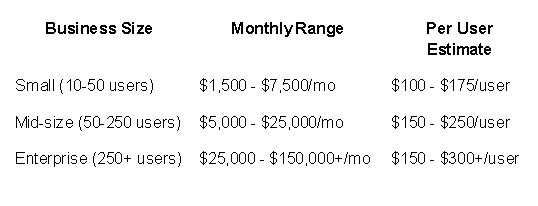
Source: Industry benchmarks compiled across North American MSPs, 2026.
The lowest end of that spectrum typically covers pure monitoring, basic helpdesk, and patching. The higher tiers include cybersecurity tooling, compliance management, strategic planning, and after-hours coverage.
Anything under $75 per user per month for so-called "comprehensive" managed IT should raise serious questions about what corners are being cut.
The Four Pricing Models MSPs Use (and What Each Really Means)
Not all quotes are structured the same way, which is why comparing proposals side by side can feel like comparing apples to motorcycles. Here are the four main models you'll encounter.
1. Per-User Pricing (Most Common in 2026)
You pay a flat monthly fee for each employee covered under the agreement, regardless of how many devices they use. A single user's laptop, phone, cloud apps, and email account all fall under one line item.
Typical range: $100 - $300 per user per month
This model works well because it's predictable. Hire someone new, add a user. Someone leaves, remove them. It scales cleanly with your headcount and aligns the MSP's incentives with yours. Fewer problems for you means lower support costs for them.
2. Per-Device Pricing
You pay based on what's being managed: workstations, servers, network switches, firewalls, printers.
Typical ranges:
Workstations: $30 - $75/month
Servers: $150 - $500/month
Network devices: $25 - $75/month
This model works better for environments where employees share devices or where infrastructure is complex relative to headcount. The tradeoff is that it doesn't naturally cover user support, which may be priced separately.
3. Tiered Bundled Plans
The MSP offers two to four packages (think Basic, Professional, Enterprise) at set price points. Each tier bundles a different scope of services.
These make comparison shopping easier, but you'll often find yourself paying for a tier higher than you need just to get the one or two features that matter most, or discovering that a critical service lives in the next tier up.
4. Flat-Fee (All-Inclusive) Pricing
One monthly number covers everything: helpdesk, security, backups, compliance, and after-hours emergencies. No debate about what's "in scope."
Typical range: $200 - $400 per user per month
The sticker price is higher, but this model eliminates the surprise invoices that tend to appear after cybersecurity incidents, weekend emergencies, or server-level problems with other providers. The MSP has a real financial incentive to prevent problems rather than bill you for fixing them.
What's Actually Driving Your MSP Quote?
MSPs don't pull pricing from thin air. Several factors consistently move the number up or down.
Number of users and devices. The more endpoints and people to support, the higher the base cost. That said, larger organizations often negotiate volume discounts. A 200-person company typically gets a lower per-seat rate than a 20-person company.
Industry and compliance requirements. If your business operates under HIPAA, CMMC, PCI-DSS, or SOC 2 requirements, expect to pay more. Compliance is labor-intensive and specialized work. Providers who don't mention compliance at all during scoping are a red flag for regulated industries.
Cybersecurity depth. Basic antivirus and a firewall is not 2026 cybersecurity. Modern managed security includes endpoint detection and response (EDR), dark web monitoring, multi-factor authentication enforcement, and often security awareness training. Each layer adds to the monthly cost, but the alternative is exposure to breaches that can cost tens of thousands of dollars in response fees alone.
After-hours coverage. Many MSPs advertise 24/7 support but charge overtime rates the moment you call outside business hours. Clarify this before signing. A standard $150/user quote might balloon if your team operates across time zones or has weekend production environments.
Environmental complexity. A business running standardized hardware and Microsoft 365 is cheaper to support than one with custom software, legacy on-premise servers, mixed operating systems, and multiple physical locations. If the MSP didn't ask you detailed questions during scoping, their quote probably doesn't reflect your actual environment.
Contract length. Multi-year agreements typically come with a 5 to 15 percent discount compared to month-to-month pricing.
The Hidden Costs Most Businesses Don't See Coming
Here's where the gap between the quote and the actual bill can become significant.
Onboarding fees. Many MSPs charge a one-time setup fee to document your environment, deploy monitoring tools, and run an initial security assessment. These can range from $2,000 to $10,000 depending on complexity.
Out-of-scope project work. Standard managed contracts cover day-to-day support. When you need a network overhaul, a cloud migration, or a Windows 11 rollout, those are typically billed separately, sometimes at $175 to $350 per hour.
Cybersecurity incident response. Unless your contract explicitly covers incident response, a serious security event can arrive as a separate bill. The average cybersecurity incident response engagement runs $50,000 to $100,000. Some providers won't mention this until you're mid-crisis.
Software licensing markups. MSPs often resell licenses for Microsoft 365, backup platforms, and security tools. Sometimes they can get you better pricing. Other times, a 20 to 40 percent markup quietly appears in the bill. Always ask.
Third-party tool price increases. Many MSPs bundle third-party security and monitoring tools into their monthly fee. When those vendors raise rates (which happens frequently), those increases get passed along to you.
The pattern is the same across providers who rely on this billing structure: a low headline rate and an unpredictable total. When comparing quotes, always ask what isn't included, not just what is.
Managed IT vs. Hiring In-House: The Real Cost Comparison
It's tempting to think an internal IT person solves the problem. The economics tell a different story.
A single mid-level IT generalist in a major metro area runs $70,000 to $95,000 in annual salary. Add benefits, payroll taxes, PTO, training, and software tools, and you're looking at $110,000 to $130,000 per year for one person who goes home at 6 pm and takes a vacation.
That one person cannot be an expert in networking, cybersecurity, cloud infrastructure, compliance, and help desk support simultaneously. As the IT industry has grown more specialized, the gap between what a generalist can handle and what modern environments actually need has widened considerably.
A well-scoped managed IT agreement gives you a full team with specialized roles, enterprise-grade tooling, and 24/7 coverage, often for comparable or lower total cost.
What Good Managed IT Looks Like at Each Price Point
$75 to $125/user/month
Expect monitoring, basic helpdesk, patch management, and antivirus. This tier typically has limited after-hours support, no dedicated security stack, and no compliance assistance. Appropriate for very small businesses with minimal risk exposure and simple environments. Not appropriate for anyone handling sensitive data.
$125 to $200/user/month
A solid mid-tier that should include helpdesk, monitoring, endpoint security, backups, and email security. Watch for what's excluded, specifically after-hours coverage, project work, and compliance. This is the most common range for businesses with 25 to 100 employees.
$200 to $300+/user/month
At this level, you should expect a full security stack (EDR, dark web monitoring, vulnerability assessments), compliance management, a dedicated account manager, quarterly business reviews, strategic IT planning (sometimes called vCIO services), and genuine 24/7 support with defined response times.
If a provider is charging $200+ per user but can't clearly articulate what's included and excluded, that's a problem worth pressing on before you sign.
Questions to Ask Every MSP Before You Commit
Comparing proposals is much easier when you ask the same questions across providers:
What is specifically excluded from the monthly fee?
How are after-hours incidents handled, and at what cost?
Is cybersecurity incident response covered, or billed separately?
How do you handle project work (migrations, upgrades, new office setups)?
What does onboarding cost, and what does it include?
Can you provide references from businesses similar to mine in size and industry?
What are the contract exit terms if we're not satisfied?
How are software license costs handled?
What compliance standards do you actively support?
What does a typical monthly support experience look like for a company our size?
A provider that hesitates or deflects on any of these questions is showing you something important.
What Total Secure Technology Delivers
At Total Secure Technology, we built our managed IT service model around one idea: your monthly bill should not surprise you.
We work with businesses that are tired of IT being a source of uncertainty, a system that seems fine until it isn't, with invoices that expand whenever something goes wrong. Our approach is proactive, not reactive. We monitor, patch, harden, and plan ahead so that the 2am phone call and the five-figure emergency bill stay off your calendar.
Our services include:
Full-stack managed IT support with defined response times
Cybersecurity is built into every plan, not bolted on as an add-on
Compliance support for regulated industries
Transparent, predictable monthly pricing with no surprise out-of-scope fees
Strategic IT planning so your technology grows with your business
We serve businesses across the region with a team that treats your infrastructure like it's our own, because the reality is, if something breaks on your end, it becomes our problem to solve.
If you're currently comparing proposals and want a straight conversation about what your environment actually needs and what it should cost, we're happy to have that conversation.
Get in touch with Total Secure Technology today, and let's talk about what the right fit looks like for your business.
The Bottom Line
Managed IT services in 2026 range from $100 to $300 per user per month for most businesses. The right number for your organization depends on your size, industry, security requirements, and how much predictability you need in your IT budget.
The cheapest option is rarely the cheapest option. When you subtract cybersecurity depth, compliance coverage, after-hours support, and incident response, a $99/user quote can quietly become the most expensive decision you made all year.
Shop based on scope, not just price. Ask what's not included. Get your total cost of ownership in writing. And work with a provider who's willing to show their work.

schedule an appointment today
Enter your name and email to get started today.
Featured Posts
How Much Do Managed IT Services Cost in 2026?
A no-fluff pricing guide for businesses actively comparing MSPs
You've started getting quotes. One MSP says $99 per user per month. Another says $275. A third sends you a proposal so vague it might as well be written in a foreign language.
That range is not a mistake. It reflects a real difference in what you're actually buying, and understanding that difference could save your business from a very expensive misunderstanding.
This guide breaks down what managed IT services actually cost in 2026, what drives the price up or down, which pricing models to watch out for, and what a fair deal looks like for your company's size. If you're actively comparing providers right now, read this before you sign anything.
What Is the Average Cost of Managed IT Services in 2026?
Here's the short answer most providers won't give you upfront:
Most businesses pay between $100 and $300 per user per month for managed IT services in 2026, depending on what's included.
The broader picture:
Source: Industry benchmarks compiled across North American MSPs, 2026.
The lowest end of that spectrum typically covers pure monitoring, basic helpdesk, and patching. The higher tiers include cybersecurity tooling, compliance management, strategic planning, and after-hours coverage.
Anything under $75 per user per month for so-called "comprehensive" managed IT should raise serious questions about what corners are being cut.
The Four Pricing Models MSPs Use (and What Each Really Means)
Not all quotes are structured the same way, which is why comparing proposals side by side can feel like comparing apples to motorcycles. Here are the four main models you'll encounter.
1. Per-User Pricing (Most Common in 2026)
You pay a flat monthly fee for each employee covered under the agreement, regardless of how many devices they use. A single user's laptop, phone, cloud apps, and email account all fall under one line item.
Typical range: $100 - $300 per user per month
This model works well because it's predictable. Hire someone new, add a user. Someone leaves, remove them. It scales cleanly with your headcount and aligns the MSP's incentives with yours. Fewer problems for you means lower support costs for them.
2. Per-Device Pricing
You pay based on what's being managed: workstations, servers, network switches, firewalls, printers.
Typical ranges:
Workstations: $30 - $75/month
Servers: $150 - $500/month
Network devices: $25 - $75/month
This model works better for environments where employees share devices or where infrastructure is complex relative to headcount. The tradeoff is that it doesn't naturally cover user support, which may be priced separately.
3. Tiered Bundled Plans
The MSP offers two to four packages (think Basic, Professional, Enterprise) at set price points. Each tier bundles a different scope of services.
These make comparison shopping easier, but you'll often find yourself paying for a tier higher than you need just to get the one or two features that matter most, or discovering that a critical service lives in the next tier up.
4. Flat-Fee (All-Inclusive) Pricing
One monthly number covers everything: helpdesk, security, backups, compliance, and after-hours emergencies. No debate about what's "in scope."
Typical range: $200 - $400 per user per month
The sticker price is higher, but this model eliminates the surprise invoices that tend to appear after cybersecurity incidents, weekend emergencies, or server-level problems with other providers. The MSP has a real financial incentive to prevent problems rather than bill you for fixing them.
What's Actually Driving Your MSP Quote?
MSPs don't pull pricing from thin air. Several factors consistently move the number up or down.
Number of users and devices. The more endpoints and people to support, the higher the base cost. That said, larger organizations often negotiate volume discounts. A 200-person company typically gets a lower per-seat rate than a 20-person company.
Industry and compliance requirements. If your business operates under HIPAA, CMMC, PCI-DSS, or SOC 2 requirements, expect to pay more. Compliance is labor-intensive and specialized work. Providers who don't mention compliance at all during scoping are a red flag for regulated industries.
Cybersecurity depth. Basic antivirus and a firewall is not 2026 cybersecurity. Modern managed security includes endpoint detection and response (EDR), dark web monitoring, multi-factor authentication enforcement, and often security awareness training. Each layer adds to the monthly cost, but the alternative is exposure to breaches that can cost tens of thousands of dollars in response fees alone.
After-hours coverage. Many MSPs advertise 24/7 support but charge overtime rates the moment you call outside business hours. Clarify this before signing. A standard $150/user quote might balloon if your team operates across time zones or has weekend production environments.
Environmental complexity. A business running standardized hardware and Microsoft 365 is cheaper to support than one with custom software, legacy on-premise servers, mixed operating systems, and multiple physical locations. If the MSP didn't ask you detailed questions during scoping, their quote probably doesn't reflect your actual environment.
Contract length. Multi-year agreements typically come with a 5 to 15 percent discount compared to month-to-month pricing.
The Hidden Costs Most Businesses Don't See Coming
Here's where the gap between the quote and the actual bill can become significant.
Onboarding fees. Many MSPs charge a one-time setup fee to document your environment, deploy monitoring tools, and run an initial security assessment. These can range from $2,000 to $10,000 depending on complexity.
Out-of-scope project work. Standard managed contracts cover day-to-day support. When you need a network overhaul, a cloud migration, or a Windows 11 rollout, those are typically billed separately, sometimes at $175 to $350 per hour.
Cybersecurity incident response. Unless your contract explicitly covers incident response, a serious security event can arrive as a separate bill. The average cybersecurity incident response engagement runs $50,000 to $100,000. Some providers won't mention this until you're mid-crisis.
Software licensing markups. MSPs often resell licenses for Microsoft 365, backup platforms, and security tools. Sometimes they can get you better pricing. Other times, a 20 to 40 percent markup quietly appears in the bill. Always ask.
Third-party tool price increases. Many MSPs bundle third-party security and monitoring tools into their monthly fee. When those vendors raise rates (which happens frequently), those increases get passed along to you.
The pattern is the same across providers who rely on this billing structure: a low headline rate and an unpredictable total. When comparing quotes, always ask what isn't included, not just what is.
Managed IT vs. Hiring In-House: The Real Cost Comparison
It's tempting to think an internal IT person solves the problem. The economics tell a different story.
A single mid-level IT generalist in a major metro area runs $70,000 to $95,000 in annual salary. Add benefits, payroll taxes, PTO, training, and software tools, and you're looking at $110,000 to $130,000 per year for one person who goes home at 6 pm and takes a vacation.
That one person cannot be an expert in networking, cybersecurity, cloud infrastructure, compliance, and help desk support simultaneously. As the IT industry has grown more specialized, the gap between what a generalist can handle and what modern environments actually need has widened considerably.
A well-scoped managed IT agreement gives you a full team with specialized roles, enterprise-grade tooling, and 24/7 coverage, often for comparable or lower total cost.
What Good Managed IT Looks Like at Each Price Point
$75 to $125/user/month
Expect monitoring, basic helpdesk, patch management, and antivirus. This tier typically has limited after-hours support, no dedicated security stack, and no compliance assistance. Appropriate for very small businesses with minimal risk exposure and simple environments. Not appropriate for anyone handling sensitive data.
$125 to $200/user/month
A solid mid-tier that should include helpdesk, monitoring, endpoint security, backups, and email security. Watch for what's excluded, specifically after-hours coverage, project work, and compliance. This is the most common range for businesses with 25 to 100 employees.
$200 to $300+/user/month
At this level, you should expect a full security stack (EDR, dark web monitoring, vulnerability assessments), compliance management, a dedicated account manager, quarterly business reviews, strategic IT planning (sometimes called vCIO services), and genuine 24/7 support with defined response times.
If a provider is charging $200+ per user but can't clearly articulate what's included and excluded, that's a problem worth pressing on before you sign.
Questions to Ask Every MSP Before You Commit
Comparing proposals is much easier when you ask the same questions across providers:
What is specifically excluded from the monthly fee?
How are after-hours incidents handled, and at what cost?
Is cybersecurity incident response covered, or billed separately?
How do you handle project work (migrations, upgrades, new office setups)?
What does onboarding cost, and what does it include?
Can you provide references from businesses similar to mine in size and industry?
What are the contract exit terms if we're not satisfied?
How are software license costs handled?
What compliance standards do you actively support?
What does a typical monthly support experience look like for a company our size?
A provider that hesitates or deflects on any of these questions is showing you something important.
What Total Secure Technology Delivers
At Total Secure Technology, we built our managed IT service model around one idea: your monthly bill should not surprise you.
We work with businesses that are tired of IT being a source of uncertainty, a system that seems fine until it isn't, with invoices that expand whenever something goes wrong. Our approach is proactive, not reactive. We monitor, patch, harden, and plan ahead so that the 2am phone call and the five-figure emergency bill stay off your calendar.
Our services include:
Full-stack managed IT support with defined response times
Cybersecurity is built into every plan, not bolted on as an add-on
Compliance support for regulated industries
Transparent, predictable monthly pricing with no surprise out-of-scope fees
Strategic IT planning so your technology grows with your business
We serve businesses across the region with a team that treats your infrastructure like it's our own, because the reality is, if something breaks on your end, it becomes our problem to solve.
If you're currently comparing proposals and want a straight conversation about what your environment actually needs and what it should cost, we're happy to have that conversation.
Get in touch with Total Secure Technology today, and let's talk about what the right fit looks like for your business.
The Bottom Line
Managed IT services in 2026 range from $100 to $300 per user per month for most businesses. The right number for your organization depends on your size, industry, security requirements, and how much predictability you need in your IT budget.
The cheapest option is rarely the cheapest option. When you subtract cybersecurity depth, compliance coverage, after-hours support, and incident response, a $99/user quote can quietly become the most expensive decision you made all year.
Shop based on scope, not just price. Ask what's not included. Get your total cost of ownership in writing. And work with a provider who's willing to show their work.
Subscribe to Our Newsletter
Ready to Take IT Off Your Worry List?
Schedule your IT strategy session today.

Headquarters
Sacramento Office
3284 Ramos Cir, Sacramento, CA 95827
Cheyenne Office
1621 Central Ave #8788 Cheyenne, WY 82001
© 2026 Total Secure Technology. All Rights Reserved. Built in partnership with Tech Pro Marketing. | Areas We Serve | Privacy Policy | Terms